Small Tattoo Ideas That Age Well: Styles, Spots, Sizing
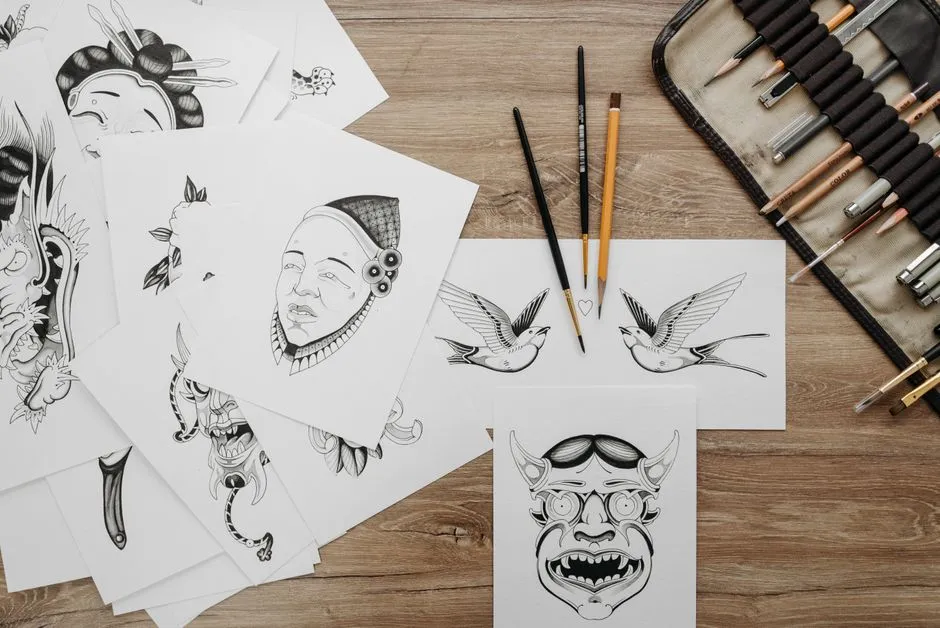
What Makes a Small Tattoo Idea Actually Good?
A good small tattoo idea is a design that stays readable as skin ages: simple shapes, clean lines with a little breathing room, and a concept that means something to you beyond this year's feed. The best small tattoos share three traits — bold-enough linework, uncluttered composition, and a placement that suits the design's shape. Get those right and a two-inch piece can look sharp for decades. Get them wrong and even beautiful ink can soften into a smudge within a few years.
That's the honest tension at the heart of small tattoos: the internet is full of gorgeous, ultra-delicate designs photographed on day one, fresh out of the studio. This guide is about day 3,650 — ideas, styles, spots, and sizing rules chosen for how they'll hold up, not just how they photograph.
Small Tattoo Ideas by Theme
You don't need a grand concept. Small tattoos work best when the idea is distilled to one clear image. Here are themes that consistently translate well at small sizes.
Small Meaningful Tattoo Ideas
Meaning doesn't require complexity. Some of the most personal small tattoos are the simplest:
- A single word or short phrase in a clean typeface or your own handwriting — a name, a date, a word you live by. Keep letters at least a few millimeters tall so they stay legible.
- Coordinates or a date marking a place or moment that shaped you.
- A symbol from your family or culture — simplified, not miniaturized. Ask your artist to redraw it at scale rather than shrinking a detailed original.
- An animal in silhouette — a swallow, a bee, a dog's profile. Silhouettes age far better than tiny portraits.
- Handwriting from someone you love, traced from a card or letter. One short word works; a full sentence usually doesn't at small scale.
Minimalist Tattoo Ideas
Minimalism is a discipline, not just a size. These concepts thrive on restraint:
- Single-line (continuous line) drawings — a face, a wave, a mountain range drawn without lifting the pen.
- Geometric shapes — a small triangle, circle, or arrow. Simple geometry is forgiving as skin changes.
- A crescent moon, sun, or single star — classics because they read instantly at any size.
- Botanical sprigs — a stem of lavender, an olive branch, a fern. Keep leaves distinct rather than densely packed.
- A tiny wave, mountain, or horizon line for people pulled toward a landscape.
Small First Tattoo Ideas
If this is your first tattoo, small is a smart way to learn how your skin takes ink and how you handle the process. Good starter concepts:
- A simple outline piece (heart, star, moon) in one color — quick sessions, easy healing, timeless look.
- A short word on the inner forearm — visible to you, easy to sit for, and one of the easier areas to tattoo.
- A small symbol you've wanted for years, not weeks. The classic advice holds: if you'd still want it after sitting with the idea for a few months, it's probably a keeper.
First tattoos also raise practical questions about discomfort. Location matters more than size here — check our tattoo pain chart by body area before you commit to a spot, because a tiny tattoo on the ribs can be a harder sit than a larger one on the outer arm.
Small Tattoo Styles: Which Ones Age Well?
Style choice affects longevity more than almost anything else. Here's how the popular small-tattoo styles compare.
| Style | Look | How It Ages | Best For |
|---|---|---|---|
| Fine line | Delicate, single-needle look | Softens fastest; needs careful sizing and touch-ups | Subtle scripts, botanicals |
| Minimalist / geometric | Clean shapes, sparse detail | Ages well when lines aren't hairline-thin | Symbols, shapes |
| Traditional (bold line) | Thick outlines, simple shading | Best long-term readability | Classic motifs at small scale |
| Blackwork silhouette | Solid black fills | Very durable; edges stay defined | Animals, botanical silhouettes |
| Micro-realism | Tiny detailed portraits/scenes | Highest risk of blurring at small size | Experienced collectors, with a specialist artist |
| Small watercolor | Soft color washes, little outline | Color softens; anchor lines help it hold | Abstract splashes, accents |
The Truth About Fine Line Tattoo Ideas
Fine line tattoos are beautiful, and they're the dominant small-tattoo style for a reason — they look effortless and elegant. But be clear-eyed about the trade-off: thinner lines carry less ink, so fine line work tends to soften and lighten sooner than bolder styles, and it's less forgiving of sun exposure and stretching.
That doesn't mean avoid the style. It means:
- Go slightly bigger than your first instinct. A fine line design that feels perfect at one inch will usually hold up better at two.
- Choose an artist who specializes in fine line work. Depth and needle control matter enormously at this scale.
- Expect a touch-up eventually, and treat that as normal maintenance, not failure.
- Skip packed detail. Five clean lines beat fifteen crowded ones every time.
Where to Put a Small Tattoo
Placement changes how a small tattoo reads, how it ages, and how much the session costs you in discomfort. A few reliable pairings:
- Inner wrist and inner forearm — the classic homes for words, dates, and small symbols. Flat, visible to you, easy to show or cover with a sleeve.
- Behind the ear — suits very small, simple marks (a note, a star, a tiny botanical). Choose something that still reads when it softens.
- Ankle and top of the foot — pretty spots for botanicals and script, though feet see friction from shoes and can be a tougher heal.
- Collarbone area — elegant for script and sprigs that follow the bone's line.
- Upper arm and shoulder — underrated for small pieces. The skin here is stable, sun exposure is easy to manage, and designs age gracefully.
- Fingers and hands — proceed with caution. These areas fade and blur faster than almost anywhere else because of constant use and skin turnover, and many artists decline tiny finger pieces for exactly that reason.
Placement deserves as much thought as the design itself — how a spot stretches, tans, and moves will shape your tattoo's whole future. For a deeper walkthrough of choosing a spot that fits both the design and your life, see our full tattoo placement guide.
Sizing: Why "As Small as Possible" Backfires
The most common small-tattoo mistake is shrinking a design past the point where it can survive. Over time, ink spreads very slightly under the skin. In a bold, well-sized design, that spread is invisible. In a tiny, tightly packed one, lines that started a hair apart can eventually merge.
Practical sizing rules that good artists follow:
- Give lines room. Elements need clear space between them — if two lines nearly touch on paper, they may touch in skin years later.
- Scale to the detail, not the wish. A design's smallest readable size is set by its most detailed element. Simplify the design or grow the size; you can't have dense detail and tiny scale.
- Lettering has a floor. Very small text is the first thing to blur. If you want a phrase, size it generously or shorten it.
- Trust the artist's counteroffer. When an artist says "I can do this, but it needs to be 30 percent bigger," that's experience talking, not upselling. A good consultation is a negotiation between your idea and what skin can actually hold.
A useful mental test: squint at the design mockup. If it turns into a gray blob, it's too small or too detailed for the size.
Do Small Tattoos Cost Less and Hurt Less?
Cost: usually, but not proportionally. Most studios charge a shop minimum that covers setup, sterile single-use supplies, and the artist's time — so a very small tattoo often costs the minimum regardless of how tiny it is. Prices vary widely by artist, city, and country, so treat any number you see online as a rough anchor and ask the studio directly.
Pain: small means short, and short helps a lot. Many small tattoos take well under an hour, which keeps even sensitive placements manageable. But location still dominates — bony and thin-skinned areas hurt more at any size.
Caring for a Small Tattoo
A small tattoo is still an open wound and heals on the same timeline as a large one. The established basics: wash gently with mild soap, apply a thin layer of fragrance-free moisturizer, and keep it out of pools, open water, and direct sun while it heals. Don't pick at flakes, even when the tattoo is tiny and the temptation is huge.
One small-tattoo-specific note: because these pieces often sit on high-visibility, high-sun spots like wrists and hands, sun protection after healing matters even more — UV exposure is a main driver of long-term fading. And if you ever see signs of infection — spreading redness, worsening pain, pus, or fever — contact your artist and see a doctor.
For the full day-by-day walkthrough, from the first wash to when you can swim again, follow our tattoo aftercare guide.
The Bottom Line
Choose one clear idea, render it in a style with staying power, size it a notch bigger than your instinct says, and put it on skin that will treat it kindly. Then bring that brief to an artist you trust and let them refine it. A small tattoo done this way isn't a lesser tattoo — it's a precise one, and precision is exactly what ages best.