How to Choose a Tattoo Artist and Safe Studio
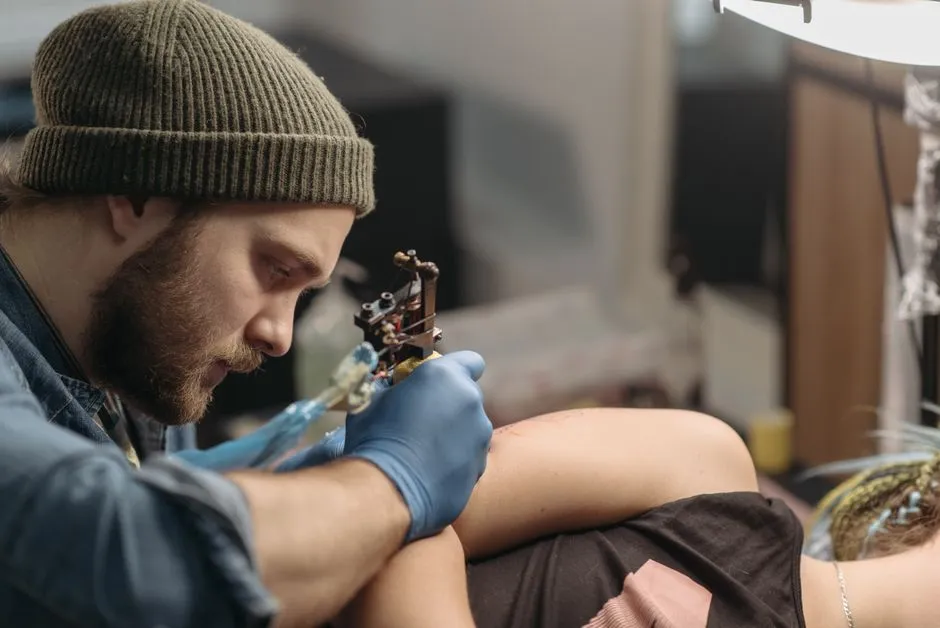
- Choose the artist first, then choose the appointment
- Start with the exact style you want
- Read a portfolio like a future owner
- Check licensing where you actually live
- What a hygienic setup should communicate
- Ask about ink and records
- Use the consultation to test the relationship
- Understand price without shopping by price alone
- Red flags worth walking away from
- After booking, protect the good decision
- The five-minute final check
- Sources
Choose the artist first, then choose the appointment
To choose a tattoo artist, find someone whose healed portfolio consistently matches the style you want, verify that the studio follows local licensing and sanitation rules, and have a consultation before money and adrenaline start making decisions for you. Ask how the design will fit your body, what size will age well, how the procedure is kept hygienic, what the deposit covers, and what aftercare support you receive.
The best artist for a bold traditional eagle may not be the best artist for a soft black-and-gray portrait. "Good at tattooing" is not one universal superpower. Style, scale, skin, placement, communication, and safety all have to line up.
This is also not a hunt for the person with the biggest follower count. Social media can introduce you to artists; it cannot inspect their work station, read the deposit policy, or tell you whether a three-month-old tattoo healed cleanly. Do the unglamorous checks. They are cheaper than laser removal and considerably more fun than an infection.
Start with the exact style you want
Describe the tattoo in practical terms before searching: subject, approximate size, color or black ink, placement, and style. Useful style words include traditional, neo-traditional, Japanese, blackwork, fine line, geometric, illustrative, realism, ornamental, and lettering. Reference images can show the mood, but do not ask an artist to copy another tattoo line for line.
Search studio directories, local portfolios, convention rosters, and recommendations from people whose actual tattoos you can inspect. Then narrow the list by relevant work. If you want tiny botanical linework, a portfolio full of enormous saturated dragons may be excellent and still be the wrong match.
Read the artist's booking information before writing. Many explain which projects they accept, minimum size, placements they decline, how they price, and when their books open. Following the requested inquiry format is your first opportunity to demonstrate that the working relationship will contain fewer avoidable emails.
Read a portfolio like a future owner
A polished feed can hide inconsistency. Review enough work to see a pattern, and ask these questions:
- Are lines deliberate and appropriate to the style rather than shaky or unexpectedly doubled?
- Do circles, borders, lettering, and repeated elements look controlled?
- Does solid color or black appear even where the style calls for it?
- Do gradients look intentional rather than patchy?
- Can you read the design from a normal viewing distance?
- Does it fit the body's curves, joints, and direction of movement?
- Does the artist show different skin tones relevant to the work you want?
- Are captions clear about collaborations, cover-ups, and work still in progress?
Most importantly, look for healed tattoos. Fresh work is red, wet, swollen, and usually photographed at its most dramatic moment. Healed photos show what remained after the skin settled. Compare fresh and healed examples when available, particularly for fine lines, color packing, white highlights, and small detail.
No portfolio can promise how your skin will heal. It can show whether an artist gets consistent results and whether their design decisions survive beyond the first photograph. If the artist recommends making a design larger or simplifying it, ask why. The answer should connect to readability, line spacing, placement, or healing - not simply "because I said so." Our guide to small tattoos that age well explains why ambitious detail sometimes needs more room to breathe.
Check licensing where you actually live
Tattoo practice is regulated locally, not by one worldwide rulebook. In the United States, the FDA says state and local authorities oversee tattooing practice, while the FDA oversees inks and pigments as cosmetics. Other countries distribute responsibility differently. Check the relevant city, county, state, provincial, or national health authority before booking.
Confirm what your jurisdiction requires of both the establishment and artist, then verify current status through the official directory or by contacting the authority. A license is a baseline, not a review of artistic skill. An astonishing portfolio does not replace registration; a framed permit does not prove the artist can draw the hands on your portrait.
Minimum age and consent rules also vary. A professional studio should know and follow its local requirements, check identification, and refuse work it cannot legally perform. Do not accept a workaround from someone treating consent law as a creative prompt.
What a hygienic setup should communicate
Tattooing repeatedly breaks the skin barrier. The FDA warns that unsterile equipment can transmit infection and that ink itself can be contaminated even when a container is sealed or labeled sterile. CDC guidance from tattoo-associated infection investigations also stresses hygienic practice, disposable gloves, products intended for tattooing, and sterile water if ink must be diluted.
As a client, you are not expected to audit a sterilization department. You should be able to ask the studio to explain its process and observe a clean, organized setup. Practices to discuss include:
- new single-use needles or needle cartridges prepared for the appointment;
- single-use items discarded safely after use;
- reusable instruments, if any, cleaned and sterilized with an appropriate controlled process;
- ink dispensed into fresh single-use caps rather than returned to a bottle;
- barriers on items touched during tattooing, such as machine parts, bottles, lights, or controls;
- work surfaces cleaned between clients;
- hand hygiene and new gloves, with gloves changed after touching phones, faces, doors, or other contaminated surfaces;
- a clear separation between clean supplies and used materials;
- an explanation of how contaminated sharps and waste are handled.
Specific required practices vary by jurisdiction and equipment, so use the local health authority as the rule source. The artist should welcome a calm safety question. They may be busy; they should not be mysterious.
If you see someone touch a phone with gloved hands and immediately return to your skin, ask them to stop and change gloves. If the room is dirty, supplies look reused, or the explanation does not make sense, leave. A deposit is not a blood oath.
Ask about ink and records
There is no visual test a client can perform to prove ink is free of contamination. The FDA explicitly notes that sealed containers can still harbor microorganisms. What you can ask is whether the studio uses ink manufactured for tattooing, checks current safety alerts or recalls, avoids reusing leftover client portions, and keeps product information connected to appointments.
Ask whether the studio can record the brand, color, and lot or batch information used on you. FDA advises people with a suspected reaction to notify the artist and ask for those details because they can help identify the source. Good records are not exciting until they suddenly are.
Never agree to ink mixed with tap water or an unknown liquid. CDC has linked nonsterile dilution practices to tattoo-associated infections and advises sterile water when dilution is needed. This is a precise safety point, not an invitation to invent your own dilution formula at home.
Use the consultation to test the relationship
A consultation should feel collaborative and specific. Bring your idea, placement options, size range, reference images, and any accessibility or privacy needs. Then ask:
- What parts of this idea suit your style?
- What would you change so it reads and ages better?
- Is the proposed size realistic for the detail?
- How will the design sit when I move?
- How long might the session take, and are breaks possible?
- When will I see the design, and what revisions are included?
- What does the deposit cover, and is it refundable or transferable?
- What is the cancellation or rescheduling policy?
- What aftercare method do you use, and how do I reach you afterward?
Notice whether the artist listens. It is normal for an expert to push back on scale or placement; it is not normal for them to mock the idea, ignore boundaries, or pressure you into subject matter you do not want. Our placement guide can help you arrive with sensible options while leaving room for the artist to map the final design.
Tell the artist about known allergies, skin conditions, medications, pregnancy, immune concerns, a tendency to form raised scars, or anything else that may affect whether tattooing is appropriate. They cannot diagnose you. If there is a medical question, ask a qualified healthcare professional before the appointment.
Understand price without shopping by price alone
Artists may charge by the piece, by time, or through a day rate, often with a shop minimum. Costs vary by region, experience, complexity, placement, and demand, so a universal online price chart is mostly fiction wearing a calculator.
Ask what the quote includes: drawing time, placement changes, session time, tax, expected tip customs in your region, and any touch-up policy. Get the deposit and cancellation terms in writing. A lower quote is not automatically suspicious, and a higher one is not proof of mastery. Compare relevant portfolio quality, safety, communication, and the full scope.
Do not negotiate by saying another artist will copy the design for less. Besides being rude, it reveals exactly why the current artist may become suddenly unavailable.
Red flags worth walking away from
Pause or leave if you encounter:
- no current license or registration where one is required;
- copied work presented as original;
- no healed examples and evasive answers about healing;
- refusal to explain hygiene or ink handling;
- dirty surfaces, reusable ink caps, or unclear needle practices;
- gloves used on contaminated objects and then returned to the procedure;
- an artist who appears impaired, exhausted beyond safe work, or reckless;
- pressure to change consent, expose more skin than needed, or tolerate harassment;
- a design radically different from what was agreed, with no time to consider it;
- promises that a tattoo is risk-free, painless, or guaranteed to heal perfectly.
You can stop at any point. Ask for a pause, repositioning, a privacy screen, or the end of the session. Consent continues after the stencil goes on and after the machine starts.
After booking, protect the good decision
Follow the studio's preparation instructions. Arrive rested, fed, hydrated, sober, and on time. Do not apply numbing products without the artist's approval. Wear clothing that gives access without unnecessary exposure and will not rub the fresh tattoo afterward.
Before leaving, obtain written aftercare instructions and the studio's contact method. Follow your artist's method, keep the area clean, and use our tattoo aftercare guide only as general background. If you develop spreading redness, worsening pain, pus, fever, or a tattoo that is not healing normally, contact the artist and a healthcare professional. The FDA likewise directs people with healing concerns, rash, or fever to seek professional care.
The five-minute final check
Before paying a deposit, confirm five things: the artist's healed work matches your style, the license checks out, hygiene questions receive clear answers, the design plan respects your body and boundaries, and every money term is written down. If one answer feels wrong, investigate. If several feel wrong, leave.
A great tattoo appointment is not thrilling because you survived chaos. It is thrilling because the art is excellent and everything around it is reassuringly professional.
Sources
- U.S. Food and Drug Administration: Think Before You Ink - Tattoo Safety
- U.S. Food and Drug Administration: Tattoos and Permanent Makeup Fact Sheet
- CDC: Tattoo-Associated Nontuberculous Mycobacterial Skin Infections
- CDC: How HIV Spreads - tattoos and cosmetic procedures
Browse our first tattoo basics for more preparation guides. The right artist will not merely tolerate good questions. They will make those questions easy to ask.